Summary
I established and led an ongoing research and discovery practice in a B2B SaaS company. My responsibility covered the research approach, access to participants, and the team’s ability to conduct and use research. The work brought regular customer contact into product planning and involved more colleagues in research.
The challenge
The company needed a sustained way to understand customer needs and evaluate proposed solutions. Research had to support product decisions as questions emerged and continue across individual projects.
Product priorities and ways of working changed over time, including a move to Shape Up. I needed to adapt how research fed into planning and delivery while maintaining customer contact, ongoing synthesis, and usability testing. Research needed to remain useful as the team changed how it planned and delivered work.
My approach
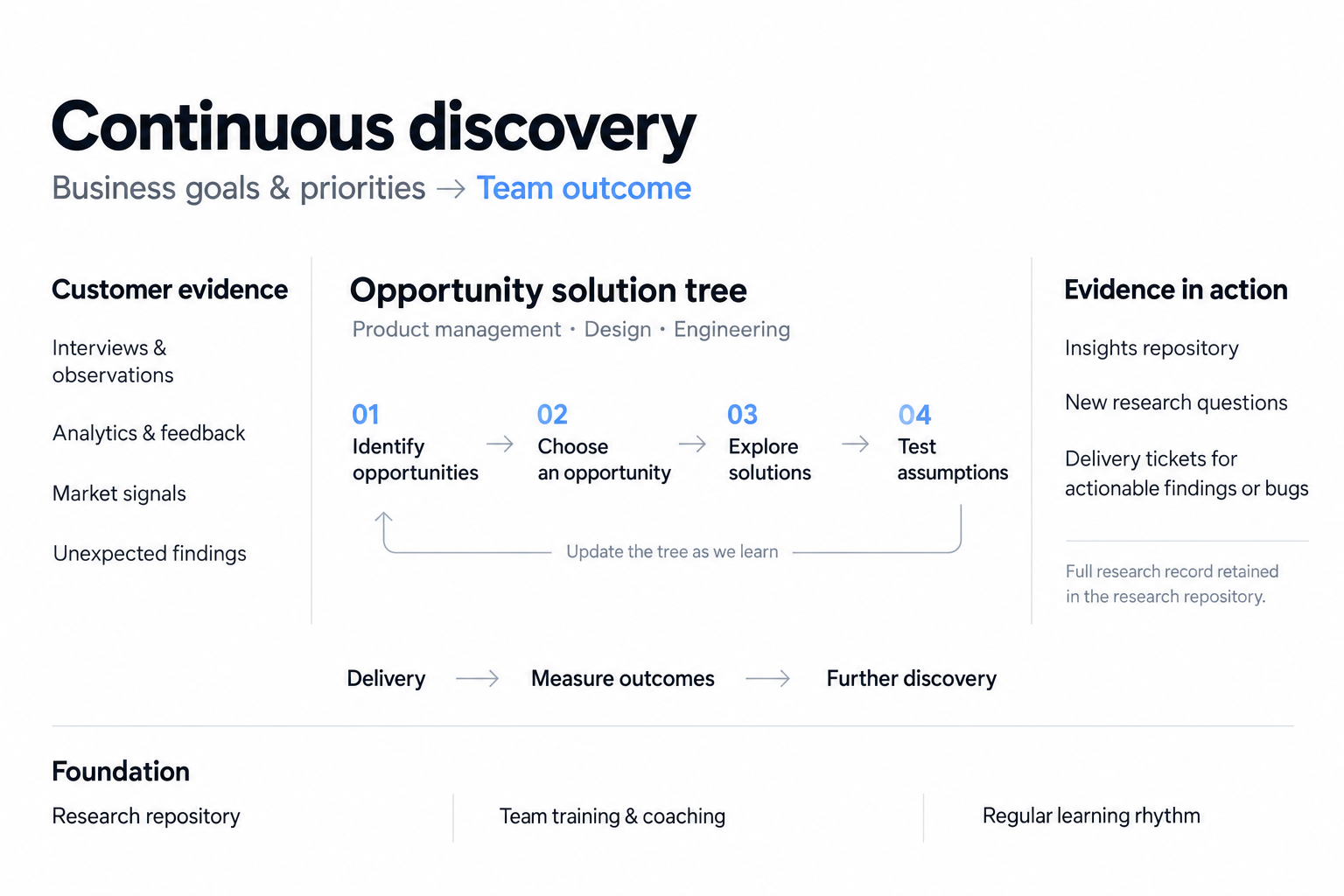
Product priorities, business goals, and changes in customer workflows shaped the research questions I developed. This gave each study a purpose connected to what the team needed to decide, while leaving room to investigate needs that were still emerging.
I built recruitment processes and drew on relationships I had developed with customers through earlier community and content work. Access to participants supported customer conversations at least weekly. Alongside interviews, I gathered feedback through other research methods and kept usability testing part of the work.
To expand the team’s capability, I organised discovery workshops and trained colleagues in interviewing. I combined this coaching with direct research work, continuing to lead studies and conduct most interviews.
As evidence accumulated, I distinguished early signals, recurring patterns, and issues requiring immediate attention. I shared insights as they emerged and maintained research resources the team could return to as questions and priorities developed. This made individual studies part of a growing body of customer evidence.
Customer needs also guided the evaluation of proposed solutions. Usability testing helped the team examine whether an evolving design addressed the needs we had identified. As planning frameworks changed, I adapted how findings entered product discussions while keeping regular customer contact and solution testing in place.
Results
We conducted another 80 interviews in the first half of 2026. I continued to lead the research, conducting approximately 80% of interviews in both 2025 and the first half of 2026.
The findings informed team decisions about new functionality, expanding or focusing the offering, and improving the customer experience. Product, design, and engineering brought their own expertise to those decisions and the work that followed.
The interview figures describe research activity and wider participation. They do not measure decision quality or establish effects on adoption, retention, or revenue.