Summary
I led research into how prospective customers understood and valued a proposed pricing model. The findings informed marketing’s launch recommendation and identified questions about pricing communication and the plans themselves.
The challenge
The product was moving from project-based to per-editor pricing. Leadership, marketing, and finance had developed the proposed direction. The research needed to examine how people interpreted the offer, what they considered reasonable to pay, and how the plans fitted their teams.
Recruitment focused on prospective customers familiar with wireframing tools. Existing customers’ migration was a separate question.
My approach
I led the study from planning through synthesis, developed the survey and discussion guide, and worked with colleagues on moderated interviews. The survey and interviews began on 11 February 2026; the final interview took place on 17 February.
I used a Van Westendorp price-sensitivity survey alongside interviews exploring the reasoning behind people’s responses. Participants considered the product and plans before seeing the proposed prices, then discussed their reactions, plan preferences, and purchasing process.
A survey dry run exposed confusion about the billing format. Comprehension checks and clarifications helped establish what respondents understood before they continued.
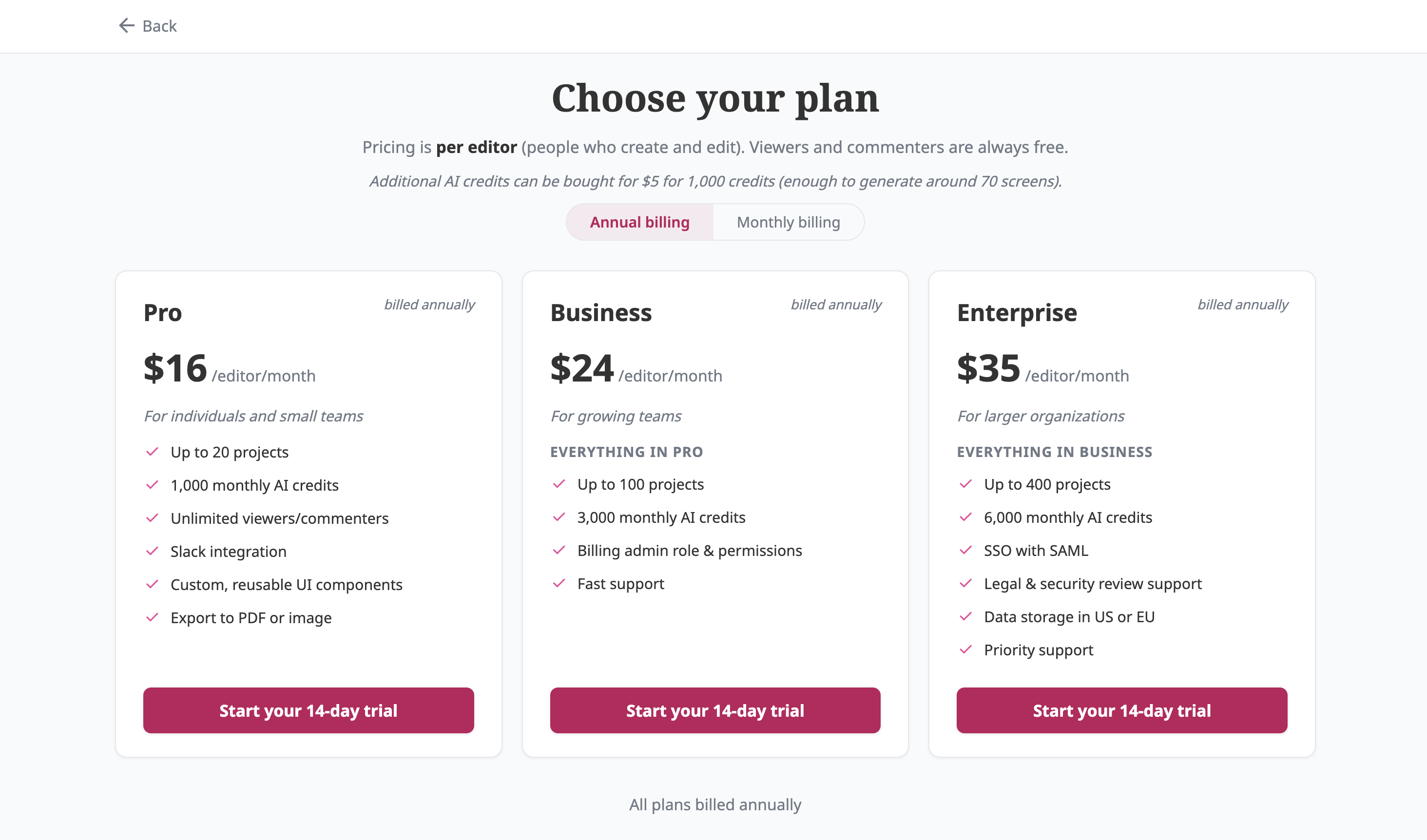
After the first interview, I revised the product description. When colleagues suggested adding a demo, I raised a trade-off: richer context could help people understand the offer, but it could also change what they thought they were pricing relative to the survey. The later guide included a demo, so I treated comparisons across sessions cautiously.
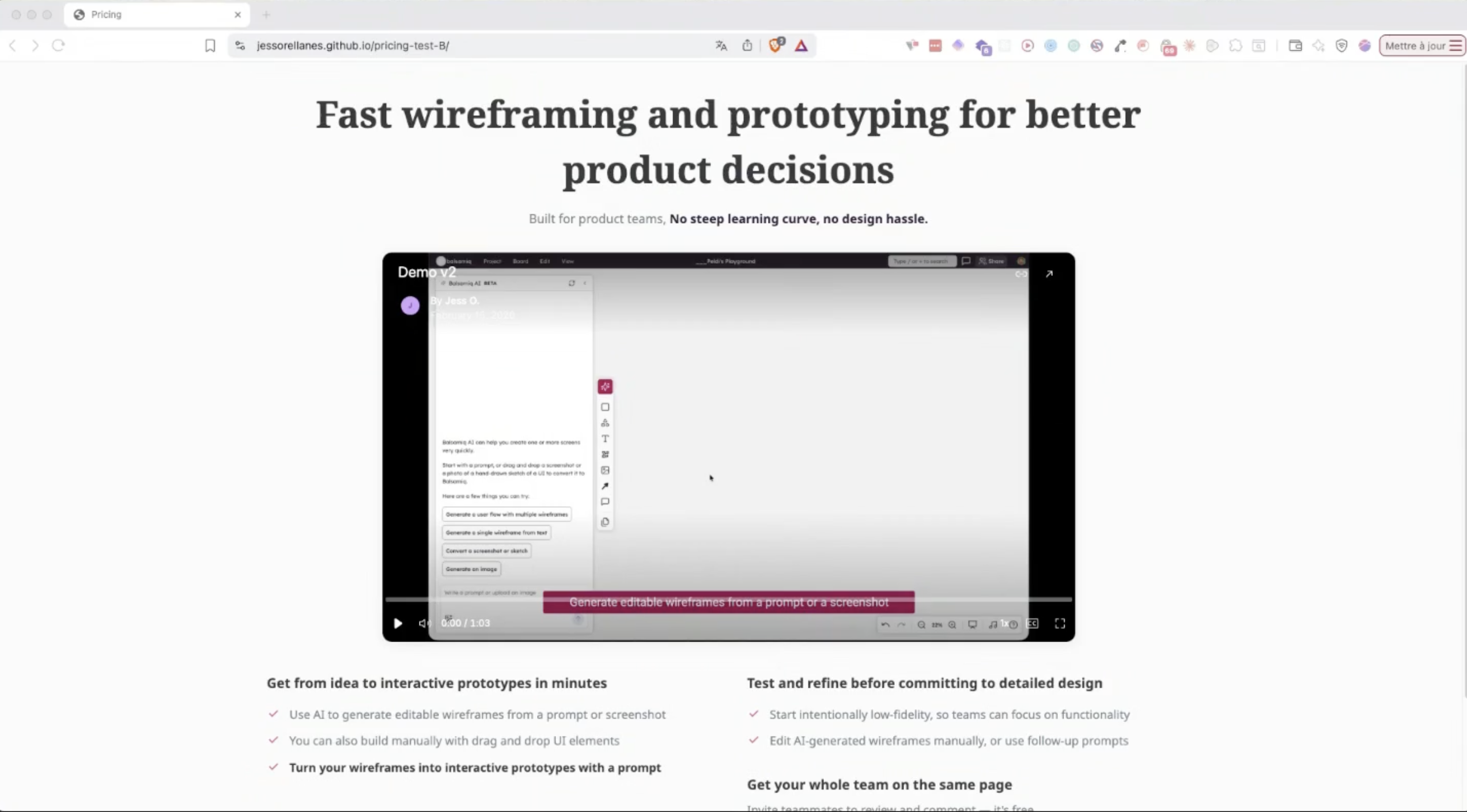
AI credits were difficult to translate into value. Interviewees struggled to understand what an allowance would let them accomplish. I recommended examples showing typical actions and their credit costs. Uncertainty about the package also limited what we could conclude from their price judgments.
The middle tier lacked a clear reason to upgrade. Survey selections favoured the entry tier, while interviews revealed unclear additional value. Some participants missed that the middle tier included the entry tier’s features. I distinguished communication problems from questions about the package itself; the study did not establish which change would resolve them.
People also evaluated the offer against different alternatives, including established design tools and AI prototyping tools. These different comparisons helped explain people’s price judgments and suggested positioning questions for further research.
Results
Marketing used the findings alongside financial modelling and competitive research to recommend launching at the proposed prices.
I contributed customer evidence and recommendations; leadership retained final pricing and launch decisions.
The study measured stated perceptions and willingness to pay. Actual purchasing behaviour and commercial effects required evaluation after launch.